

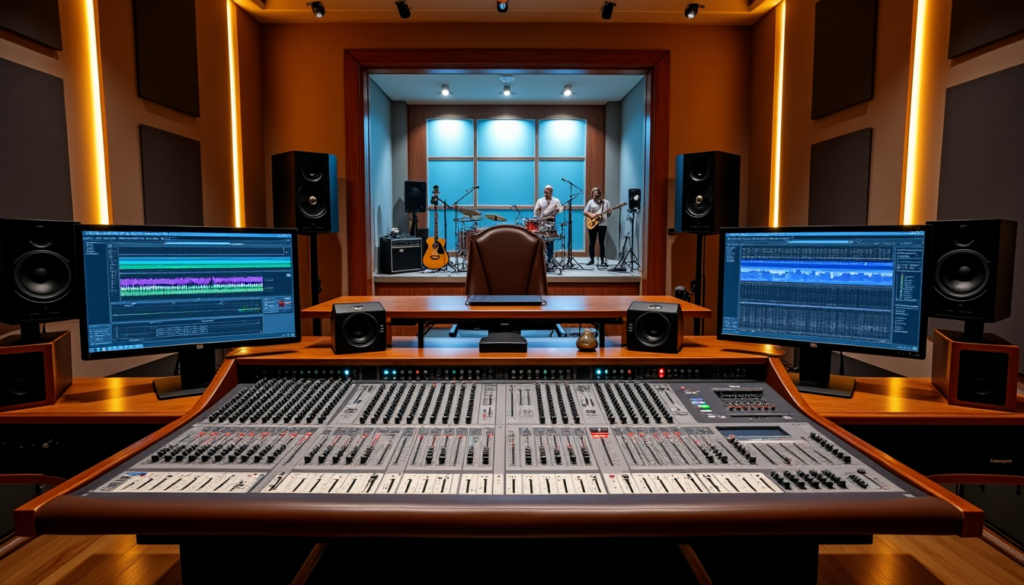
A single feature film can contain thousands of audio clips that need perfect blending. Sound mixing is nowhere near as simple as most people think. It needs careful orchestration of dialog, music, and sound effects to create an unmatched cinematic experience.
Sound mixing has grown into a sophisticated art form in today’s filmmaking. The iconic musical scores of “Star Wars” and the immersive Dolby Atmos system that wraps viewers in sound from every direction show how each element needs precise balance. Professional sound mixing brings together three key parts: human voices (often re-recorded through ADR to make them clearer), crafted sound effects, and musical elements that heighten emotional effect.
This piece takes you through the detailed world of sound mixing and shows the technical processes, tools, and techniques that turn raw audio into cinema magic. Sound professionals work hard to create the perfect audio experience for modern films – something both aspiring sound engineers and curious moviegoers will find fascinating.
Core Elements of Professional Sound Mixing
“Today all sounds belong to a continuous field of possibilities lying within the comprehensive dominion of music. Behold the new orchestra: the sonic universe!” — R. Murray Schafer, Canadian composer, writer and music educator
Sound engineers need to understand signal flow to master professional mixing. This concept maps out how audio travels from its source to the final output. Two basic routing methods shape the foundation of sound mixing: parallel paths through auxiliary sends and grouped processing through submixes.
Signal flow helps engineers make strategic routing decisions that shape sounds. You can control effects processing separately from the original track by routing audio through parallel paths. On top of that, it becomes vital to process multiple tracks together through submixing, especially when you have multi-microphone recordings or layered harmonies.
Professional mixes depend heavily on the frequency spectrum. Deep, felt-more-than-heard frequencies live in the sub-bass range (20-60 Hz). The bass range (60-250 Hz) determines if your sound comes across as fat or thin. Most instruments have their fundamental harmonics in the low midrange (250-500 Hz). The midrange (500 Hz – 2 kHz) controls how prominent instruments feel in the mix.
Audio dynamics processing plays a vital role by managing volume levels over time. Engineers achieve the perfect mix balance through careful use of compressors, limiters, and gates. EQ becomes a great way to get space between instruments, especially when you have the critical 500-1000 Hz range where too much energy creates cloudy mixes.
Digital Audio Workstations (DAWs) serve as the main platform for professional mixing today. These software suites pack powerful tools to record, edit, and process audio while maintaining pristine sound quality. Pro Tools has become the industry standard over the years, and engineers value its capability to handle up to 256 simultaneous inputs.
Your processing order makes a big difference in the final sound. To cite an instance, putting EQ before compression changes how the compressor responds to the audio signal. Engineers can create separate headphone mixes for artists while keeping consistent effects processing by understanding pre-fader versus post-fader sends.
Modern Sound Mixing Workflow
Sound mixers today follow a well-laid-out workflow that matches every audio element perfectly with the visual narrative. The process starts with careful organization of audio tracks. Sound mixers put each character’s dialog on dedicated tracks. They balance three key elements: dialog, sound effects, and music to create a cohesive soundscape.
Professional mixing’s life-blood is dialog processing. Sound engineers normalize all dialog between -11dB and -10dB. They remove unwanted background noise through careful gating and EQ adjustments. When dialog can’t be fixed, Automatic Dialog Replacement (ADR) becomes the only option.
Modern mixing software gives engineers tools to make detailed adjustments that were once limited to high-end analog equipment. These tools help mixers control volume, adjust tone, and position sounds spatially to boost the overall effect.
Engineers need to think carefully about where to place sound effects and music. They layer effects strategically to add texture without drowning out dialog. Subtle background sounds help establish atmosphere. Music should support scenes instead of overpowering them. Volume levels and dynamic changes need careful balancing against dialog and effects.
Artificial intelligence has emerged as a helpful tool in sound mixing. It can automate tasks like level adjustment and frequency identification. Notwithstanding that, mix engineers’ expertise remains crucial. Technology helps but cannot replace the subtle decisions needed for high-quality audio mixing.
The final stage involves a thorough quality check. Engineers use Audio Quality Assessment (AQA) techniques to review the mix’s overall quality. This ensures the final product sounds great on different playback systems, from cinema speakers to home entertainment setups.
Advanced Sound Mixing Techniques
ADR (Automated Dialog Replacement) represents a cutting-edge technique in professional sound mixing. Actors head to controlled studio environments to re-record their dialog. This process improves audio quality and accommodates script changes. The actors watch their scenes and listen to the original audio track through headphones. Their new performance must match both the timing and emotional delivery of what’s happening on screen.
Sound editors start by identifying lines that need replacement. They create a detailed ADR cue sheet that guides the recording sessions. Modern technology and high-speed internet now make remote ADR sessions possible. Production teams can work with talent located in different cities or countries in real time.
Sound engineers rely on specialized tools to blend ADR recordings perfectly. Pro Tools users benefit from Vocalign’s ARA2 integration, which automatically syncs replacement dialog with original performances. The team carefully matches the original environment’s acoustic properties through precise reverb and EQ adjustments.
The world of spatial audio has revolutionized immersive soundscapes. This technology builds on traditional surround sound formats and places sound in three-dimensional space. Object-based audio mixing treats each sound element as an independent entity. These elements have specific coordinates in 3D space, which allows precise positioning and movement.
Head-Related Transfer Functions (HRTFs) are crucial for spatial audio implementation. These functions show how sound changes when it interacts with a listener’s head, ears, and torso. Sound engineers use HRTFs to create convincing 3D audio experiences that work well on different playback systems.
The final mixing stage demands precise attention to detail. Sound engineers carefully automate dynamics and blend ADR with existing scene audio. Volume automation keeps levels consistent throughout, particularly during transitions between original and replaced dialog. The team uses compression to control dynamic range, which makes the dialog consistent and easier to blend with original audio.
Conclusion
Sound mixing combines technical skill with artistic vision to turn raw audio into powerful cinematic experiences. Sound engineers create immersive soundscapes through careful management of signal flow, frequencies, and dynamics that improve storytelling.
Digital tools and techniques have changed modern workflows by a lot. Professional sound mixers blend dialog, effects, and music while they retain control over each audio element. Automated Dialog Replacement and spatial audio technologies show how innovative technology continues to redefine the limits of creativity.
AI brings new possibilities for automation, but human expertise still matters most. Sound engineers mix technical knowledge with artistic judgment to create audio that appeals to audiences. They understand acoustics, psychology, and storytelling deeply to deliver natural yet captivating mixes that work on different playback systems.
Modern sound mixing balances technical precision with creative expression. Sound professionals adapt their craft as technology moves forward. They make sure each project gets the perfect audio treatment. Their work goes unnoticed when done well but serves as the foundation that lifts cinematic storytelling higher.